What We Check on Your Gutters (Besides the Gunk)
We do not just scoop and leave
Yes, we get the leaves, needles and mud out. But while we are up there with a close-up view of your gutters, we are also looking for trouble. Catching a small problem now is a lot nicer than discovering it as a soggy fascia board in spring.
Here is the checklist that runs through our heads on every run.
1. Slope
A gutter should tilt gently toward the downspout, about 1/4 inch of drop for every 10 feet. That is barely noticeable by eye, but it is the difference between water that leaves and water that sits.
Flat or sagging gutters hold water, which in Alaska means ice, extra weight and extra stress on everything holding the gutter up.
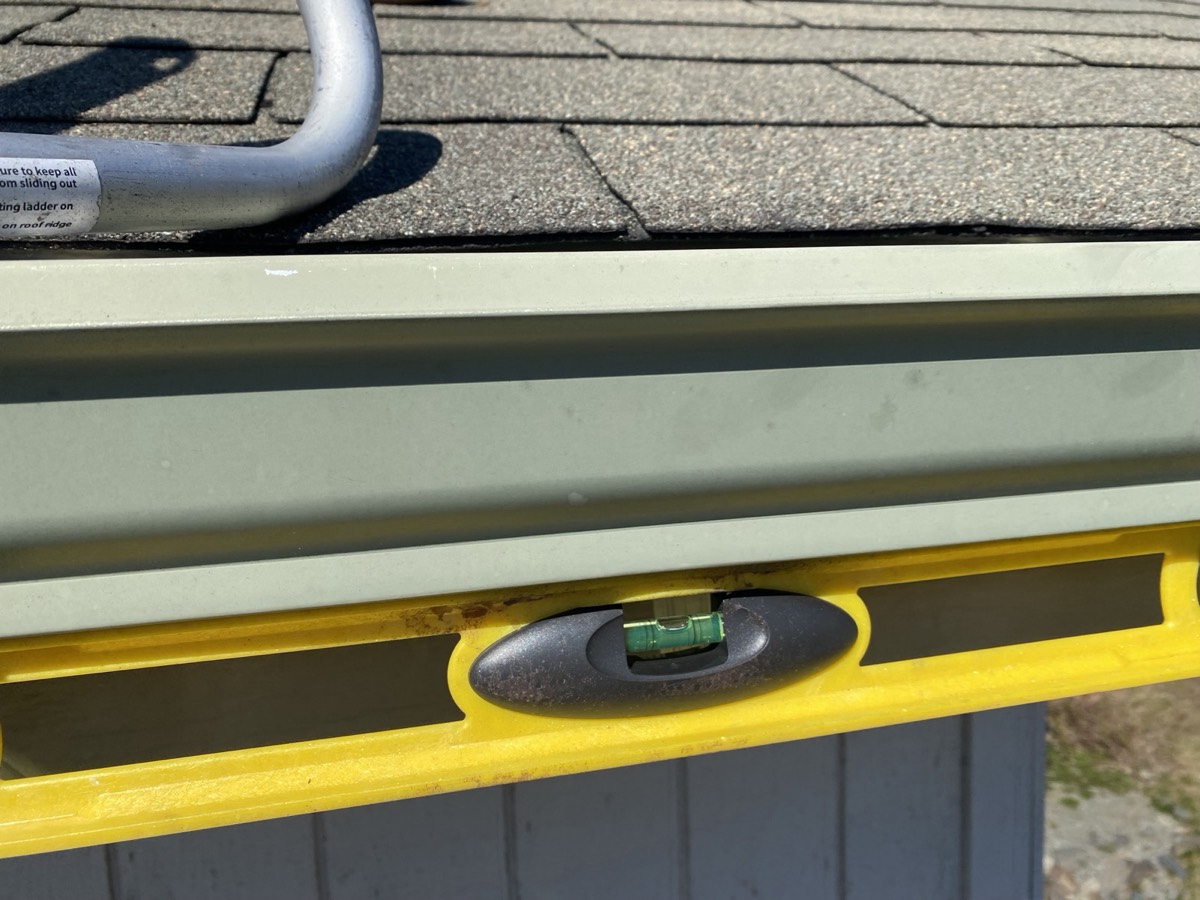
2. Hangers
Hangers are the little brackets that hold the gutter to the house. Snow and ice are heavy, and over the winters they can bend hangers or pull them loose. Older gutters held up with spikes are the most likely to let go. We look for gutters that are pulling away from the fascia, wobbling, or sagging between hangers.
3. Seams and end caps
Gutters leak where pieces meet. Freeze and thaw cycles crack old sealant, especially at spots where water tends to sit. A drip at a seam or end cap during a rain is a sign it needs resealing.
4. Downspouts
If the downspout is blocked, the whole gutter backs up behind it. We tap on the downspouts as we go. A dull thud usually means a clog, and most clogs hide in the first elbow or two. We also look for damaged sections, joints that leak, and extensions that are too short or pointing the wrong way.
5. The roof edge
Water can sneak behind a gutter if the metal at the edge of the roof is missing or too short. That sends water onto the fascia board instead of into the gutter. We take photos of anything that looks off up there.
So, what counts as normal?
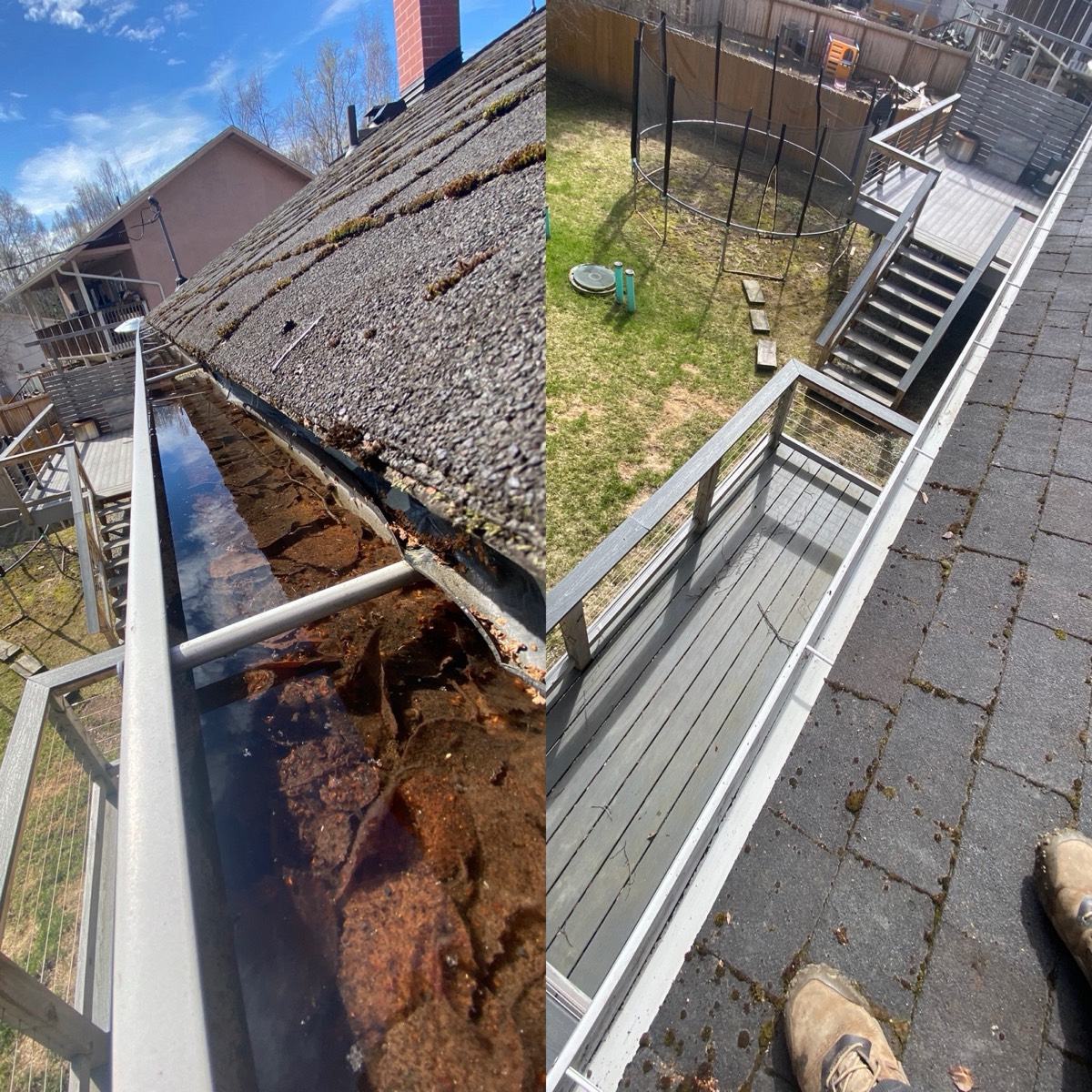
A little standing water is fine. A thin film, or shallow puddles under about 1/8 to 1/4 inch deep at seams or between hangers, that dries up within a day or two after rain, is normal.
It is a flag if:
- The water is deeper than that
- It sits longer than a couple of days
- You see it at the same spot every time it rains
That usually means the slope or a hanger needs adjusting.
Why we fix the gutter before adding guards
Gutter guards are great, but they cannot fix a gutter that does not drain. If the slope is off or the hangers are loose, we want to sort that out first so you are not paying to cover up a problem.
What happens when we find something
Photos first, then a plain-English explanation and your options. We will not do extra work without talking to you about it first.
Want a second set of eyes?
If your gutters overflow, sag, leak or just look tired, request an estimate and send us a few photos. We will tell you what we see.
Ready for a clean slate?
Tell us about your home. We review it, then send a clear written estimate. No pressure, no surprises.